It's highly recommended that business owners are prepared for lawsuits, both as the plaintiff and defendant. This involves knowing all about a service of process, which comes into play every time a lawsuit is filed. Read more about the important role registered agents play in the whole process.
Posted on
READ MORE
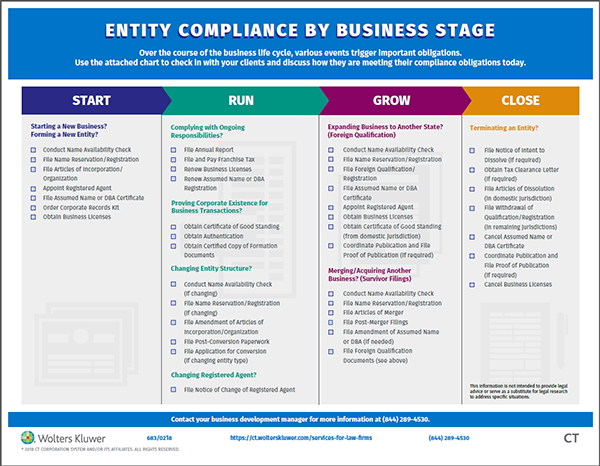
As your business grows and expands, there are different compliance obligations for each stage. To ensure your business is in compliance with all laws and regulations through the duration of your entity’s lifecycle, here’s a list of items your business will need to check off to stay in good standing.
Posted on
READ MORE
It's important for business owners to know that compliance doesn't end after the starting stage. Check out our expert-created infographic highlighting compliance issues your business could face during its lifecycle. Good standing is invaluable for a business and we want to help you keep it that way.
Topics Included
- Forming a New Business Entity
- Complying With Ongoing Responsibilities
- Changing a Registered Agent
- Providing Corporate Existence…
Posted on
READ MORE
What do most federal and state business laws have in common? Mandatory filing requirements with serious consequences for non-compliance. If you’re not on top of these ongoing compliance actions, you’re putting your company or clients at risk. Your business may face fines, administrative dissolution, even loss of access to courts. In some circumstances, certain individuals can face criminal penalties. The webinar video will arm you with the information needed to stay ahead of these…
Posted on
READ MORE
When operating a corporation, LLC, or LP, the main compliance step you’ll need to address is appointing a registered agent for service of process (SOP).
Posted on
READ MORE
Wyoming House Bill 22 provides revisions to the requirements for each business entity’s designated communications contact
Posted on
READ MORE
States often modify their statutes for business entities. Learn how a corporation, LLC, or other entity must file amendments to take advantage of a statutory update.
Posted on
READ MORE
When selecting your Registered Agent, look for a company that provides expert service and professional guidance on every aspect of business compliance. Every state requires corporations and LLCs appoint an in-state registered agent (also known as a statutory agent, or resident agent) if you’re incorporating your business or expanding into other states.
Posted on
READ MORE
Good standing can be lost by failing to maintain a registered agent or file annual reports, don't fall behind with CT.